Explaining a fade or taper without relying on the name alone
Use a reference and a few clear boundaries to discuss a short haircut at Branch 3.
Contact Paul Barber Branch 3 to confirm current availability and arrangements.
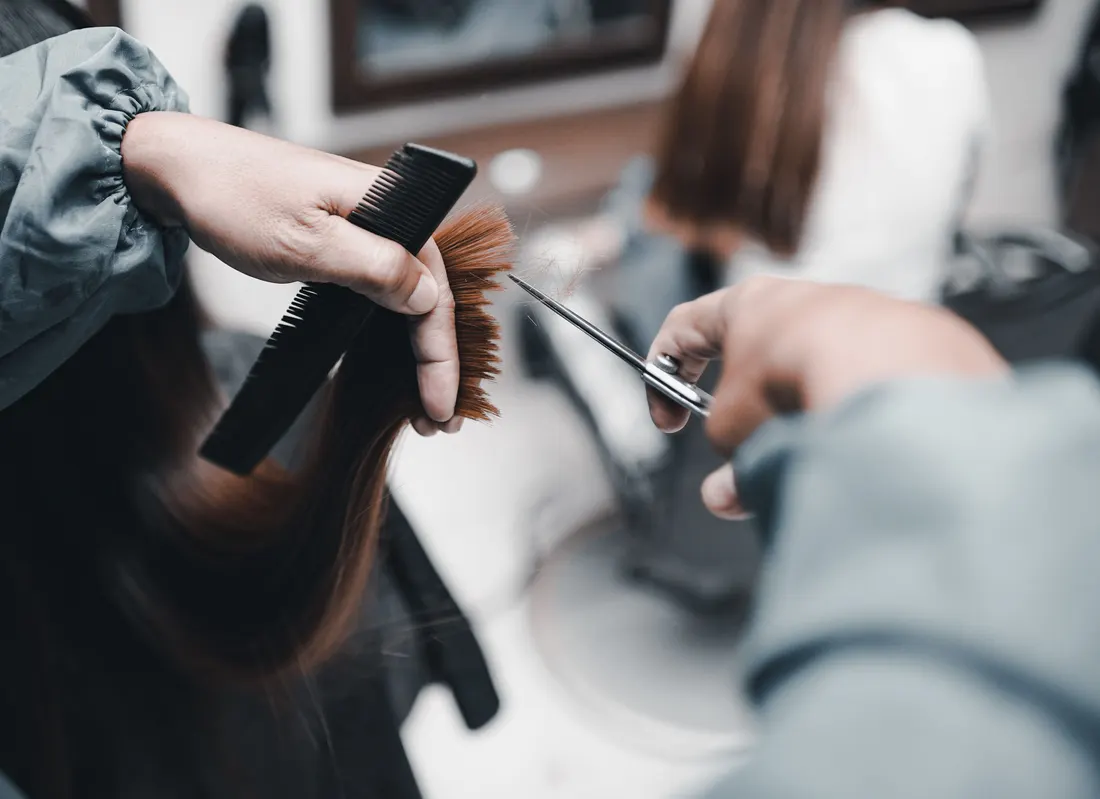
Show the outline you mean
Words such as fade and taper are useful starting points, but people may picture different heights, transitions and finishes. Show a clear side and back reference and explain which detail you like. Point out where you want the shortest area, how much length you want to keep above it, and what you want around the ears and neckline. Ask the person cutting your hair to describe the plan back to you.
Discuss the top separately
Explain how you normally wear the top, whether you use a parting, and how much time you want to spend styling it. A side-view photograph alone may not show the fringe or crown clearly. If you want enough length to brush in a particular direction, make that part of the conversation before the cut begins. Do not assume that the shortest part in a photograph is the best starting point for you.

Agree before removing more length
If you are unsure, ask to discuss the visible length and transition rather than giving a number you do not understand. A description like “keep the top; shorten the sides gradually; show me before going much shorter” gives useful boundaries, but the exact approach still needs agreement. A reference image does not establish that every feature can be reproduced on a different head of hair.
Confirm the Branch 3 appointment
Contact Paul Barber Branch 3 using the listed contact details to ask whether the requested service is available and how it is priced. Confirm the correct Muweilah branch and appointment arrangements. This website has no independently confirmed service menu, so these are consultation questions, not a claim that a named specialist cut is guaranteed. Keep a photograph of a result you like, with your permission, for a clearer discussion next time.
Frequently asked questions
Is the word fade enough to describe a haircut?
It leaves important details open. Discuss the position, transition, length and outline with the person cutting your hair.
Should I bring a picture of the back and sides?
Useful references can clarify the areas that words miss. Explain the specific features you want rather than expecting an identical result.
Continue planning
- Planning a beard-shape consultation: length, outline and upkeep
- Clipper numbers and visible length: how to avoid a misunderstanding
- A simpler short-hair styling routine: questions for your next visit
- Planning a haircut before an occasion without last-minute assumptions
All guides · Business sources and image credits · Privacy choices